
Public Servants
Save time on manually outdated tasks to focus on what matters, evidence your outcomes and impact across teams and policy alignment.
 Arturo Moreira
 | Resume
Polyloop
Product Design Design Systems
01 / Project Overview
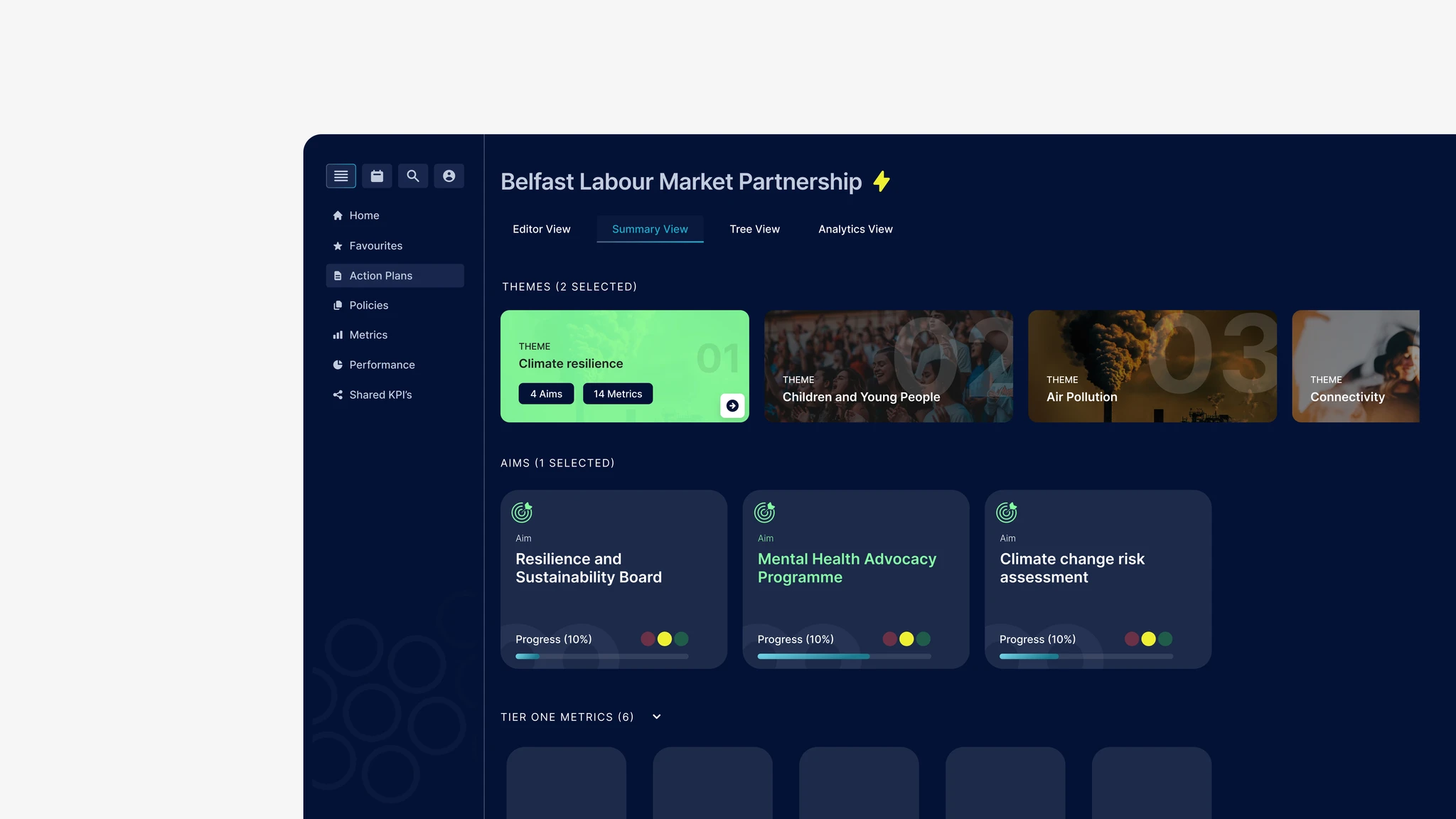
Polyloop, a game-changer in enabling public bodies to evaluate projects and programmes with cutting-edge technology. This can save the public sector significant amounts in reduced expenditure and prioritise better spending. It nurtures actions with impact by aligning with local strategy and global goals and allows you to track your impact in real-time.
My Role
Responsible for the design, research, testing and delivery of new features. Led the Design System creation, implementation and documentation.
The Team
2 designers, 1 product manager, 1 product owner and 6 engineers.
Timeline
6 months
The impact
5%
Budget Improvements
30%
Increase in KPI performance
7x
Increase in Productivity
Strategic alignment and more effective outcomes
Mandated evidence reporting achieved
AI generated content reduces drafting time and need to hire additional costly consultants or PMs
02 / Problem statement
Measuring impact is a daunting task. 92% of public spend is not evaluated robustly, only £35 billion out of £432 billion per year according to HM Treasury. The standard model of governance for a country is siloed and sometimes analog. How might we regenerate governance empowering institutions along the way?
Breaking down the problem
The current hierarchical governance structure means decision making is so removed from where the impact is felt (and consequently where some of the best solutions might come from). In fact, not only is there a lack of linkages between levels and silos, our current governance model has a multitude of challenges:
A lack of a digital, intuitive tools leads organisations into a rabbit-hole of human dependencies that waste way too much time and money. Data collection is sporadic and it has big gaps.
There is almost no joined up thinking, coherence or coordinations between siloed departments and organisations who may be striving for similar outcomes.
There is a lack of feedback and evaluation once a project or programme is implemented, making it difficult to understand what success looks like or learn for future iterations.
There is almost no consistency in how organisations should tackle their goals, write their plans or measure the impact.
03 / Process
We kicked off the process with a comprehensive round of stakeholder interviews to quickly become experts in their industry and understand what success would look like for the business.
To understand the existing pain points, we did a round of stakeholder interviews, user interviews, and benchmarked the competition.
With all the research completed, as a team we began ideating, in a round of very productive workshops.
Polyloop helps different people across organisations...
Scroll to your right
Save time on manually outdated tasks to focus on what matters, evidence your outcomes and impact across teams and policy alignment.

Disseminate your best practise, benchmark your networks and employer your members to enact on better solutions in line with your principles.

Enhance your customer coverage, apply AI over your strategy services and frameworks, support additional services potential with real-time insights.
The experience review also helped us define our focus areas for the redesign.
Key Takeaways
Say goodbye to static pdfs and spreadsheets across hundreds of different organisations. This makes it almost impossible to capture relevant data and use it for impactful decision making.
The market demands for an outcomes management, alignment and evaluation tool, all in one place.

We want to minimise the time spent onboarding users, we need them to stay focused on what matters the most.

Users must be able to see the impact they're making in the world - locally and globally.

While we can't change the jargon, we aim to make the tedious and repetitive more intuitive and engaging.
04 / Solution
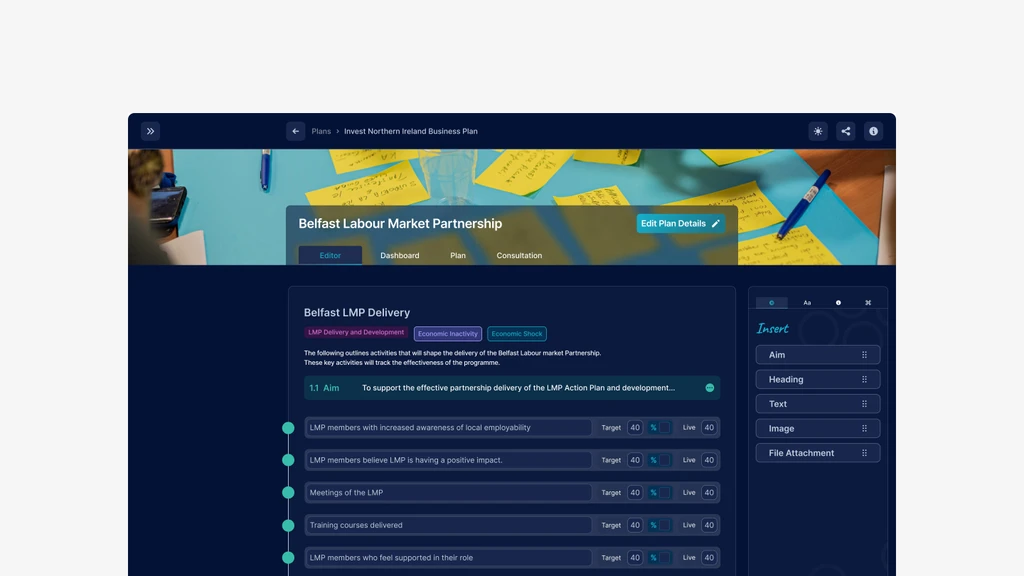
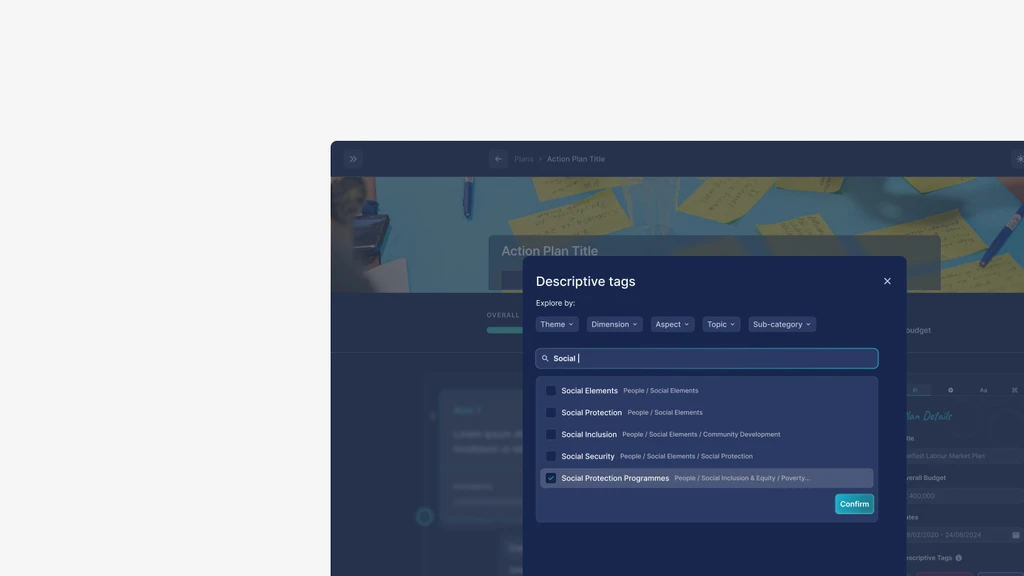
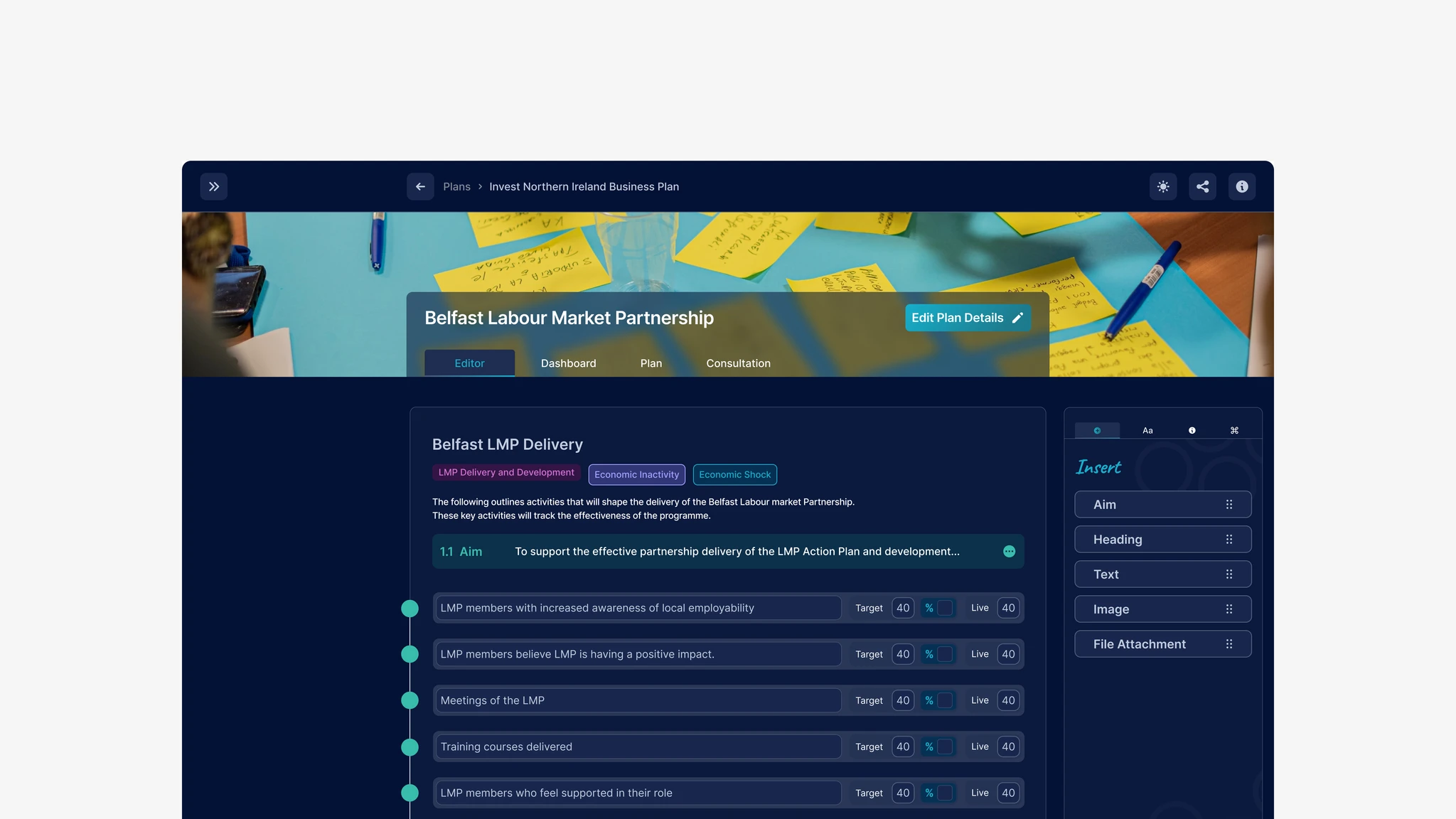
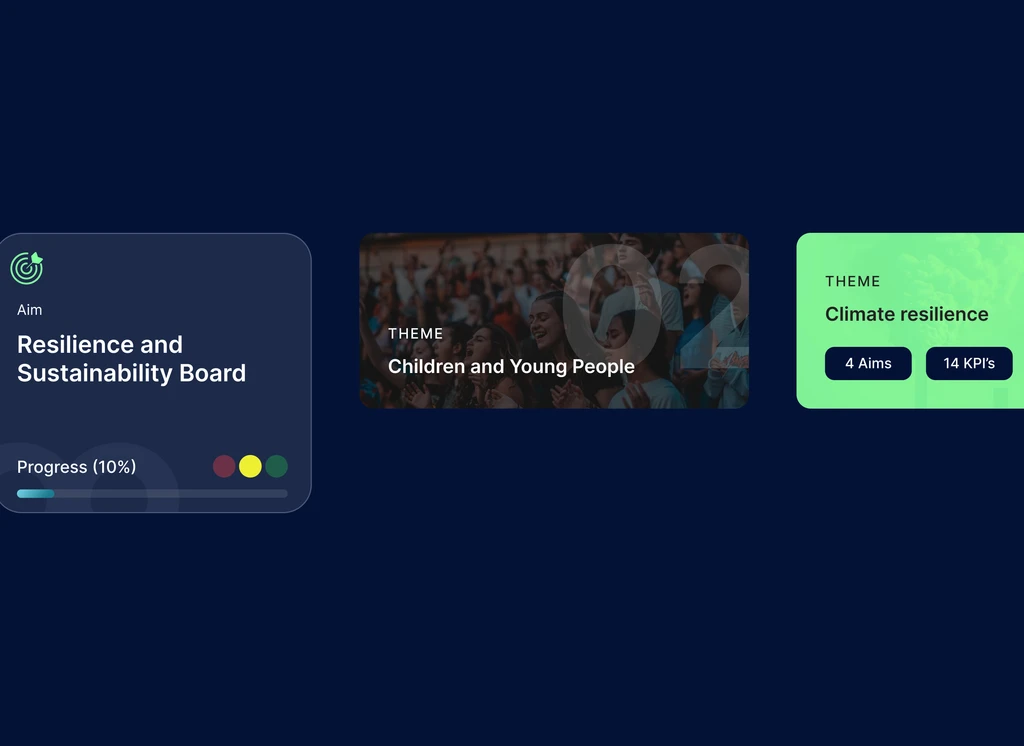
We supercharged Polyloop with new features that bridge the gap between policy design and action plan execution with visibly dynamic plan building, capturing feedback from stakeholders and suppliers, standardising outcomes alignment and KPI's for meaningful evaluations and reporting all in one platform.
User Scenario
Current operational models and workflows rely on static PDF's & spreadsheets. Team members go through the same process over and over for simple tasks like creating a new project.
Solution
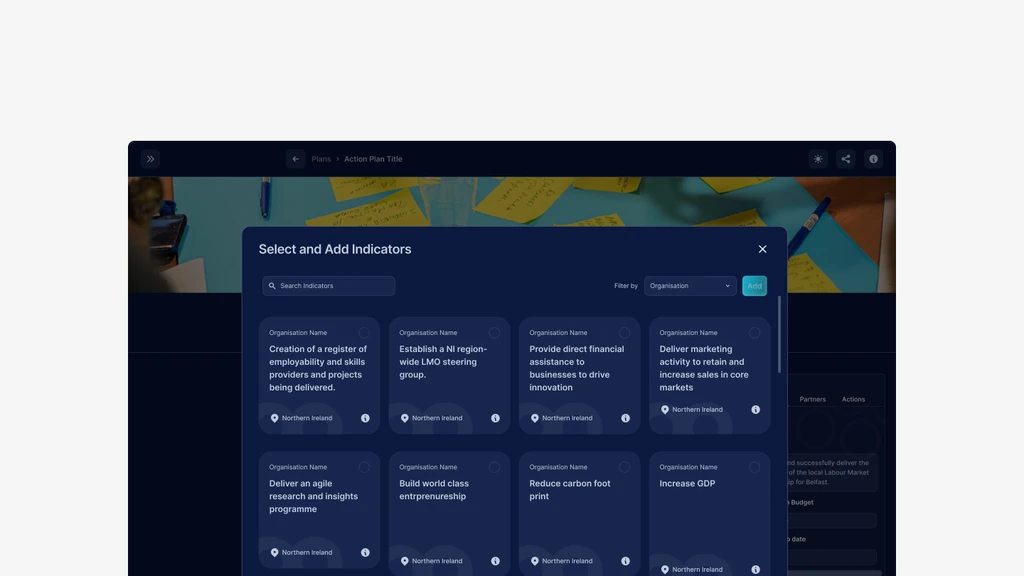
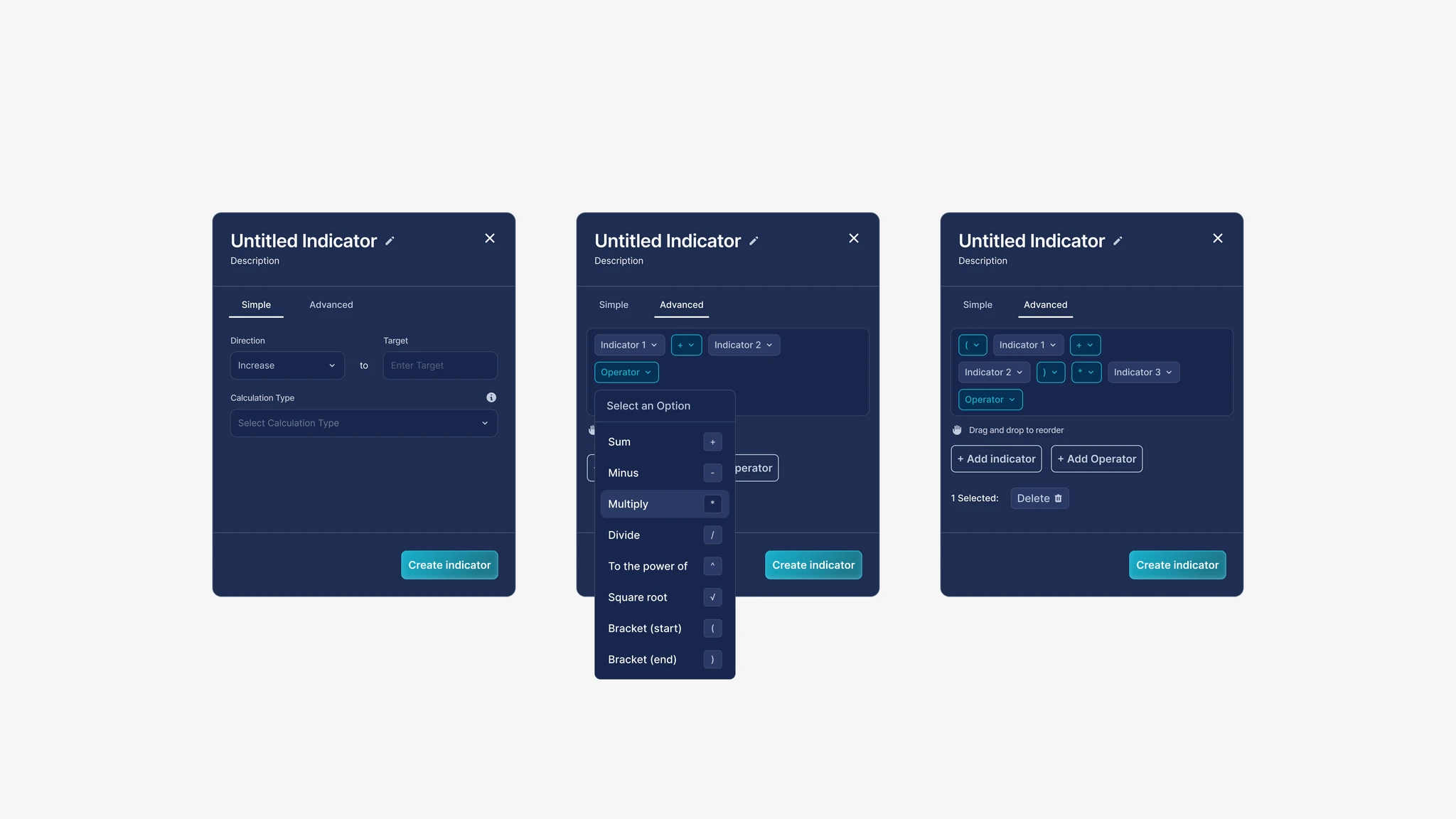
The Polyloop team worked tirelessly to compile 1000's of consistent and standardised indicators and metrics that enable users to benchmark and show how they're moving the needle. We put this at the forefront by making it part of the core user experience throughout the onboarding journey.
User Scenario
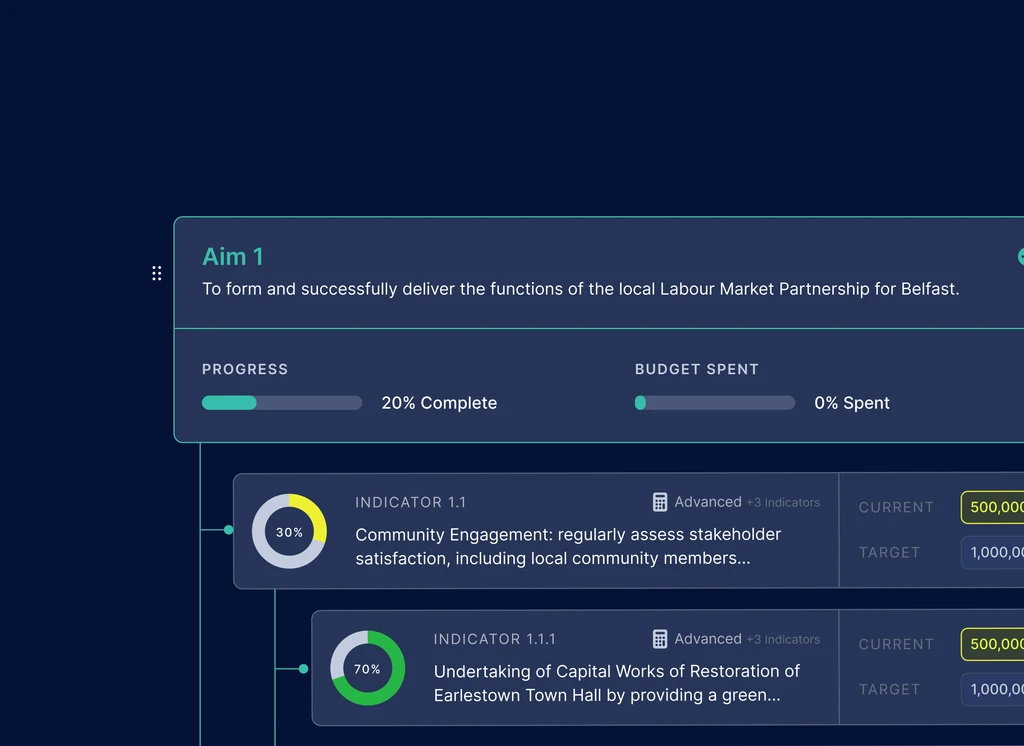
As a team member is very hard for me to relate aims or goals to a plan/programme, and even more difficult to asses improvements or track success.
Solution
Team members are not in detailed control of what they are working on, what impact they're contributing to and real-time tracking and data analytics. No more static PDF's and Excel spreadsheets.
User Scenario
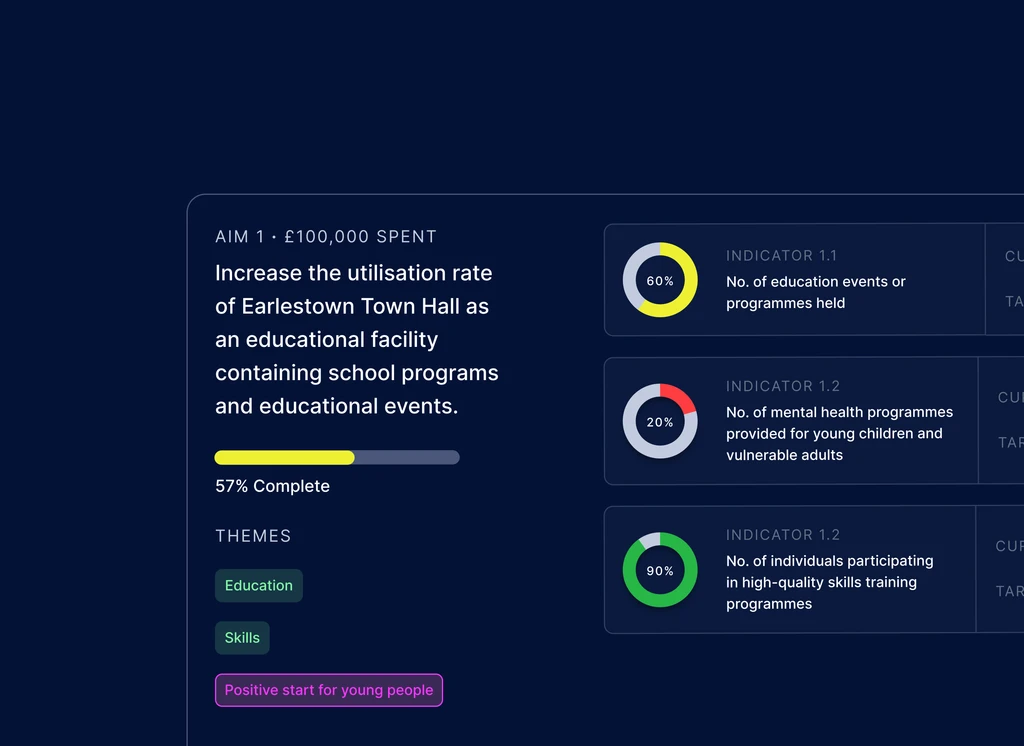
In a typical organisation model, teams spent countless hours navigating through files (often not even up to date) in order to get a sense of how things are and track any sense of success.
Solution
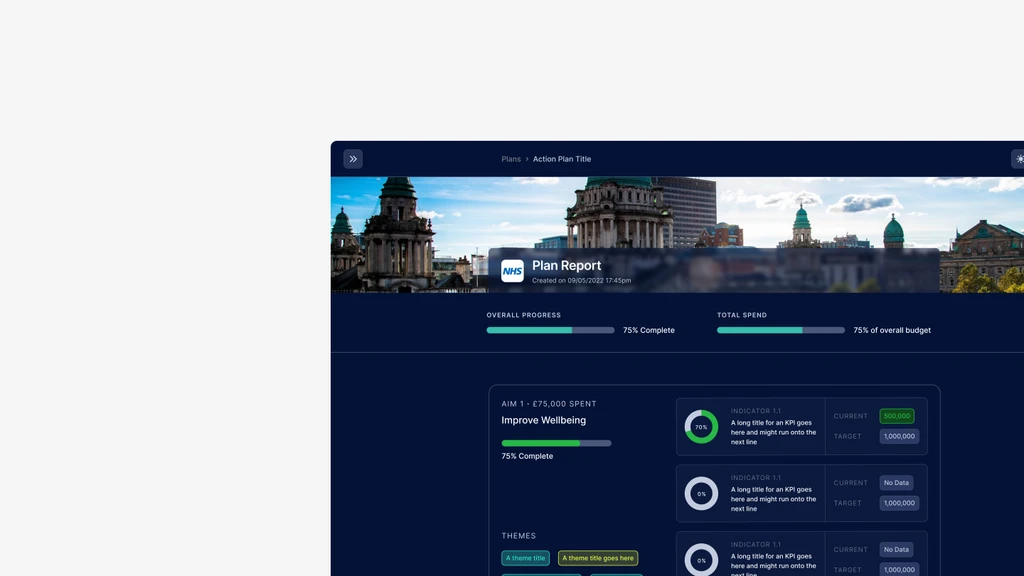
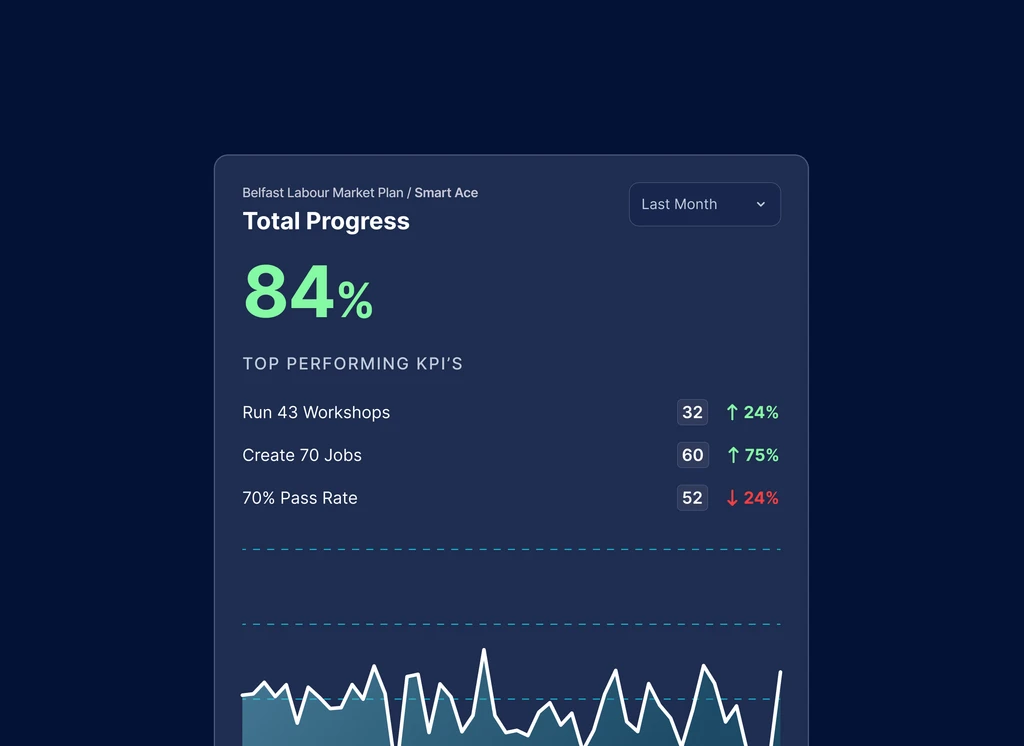
In order to truly empower teams and organisations, we believe data should be transparent, easy to access and live. Featuring a new dashboard section, users can now have a quick update of how things are going in they work they're contributing to, all at a glance.
User Scenario
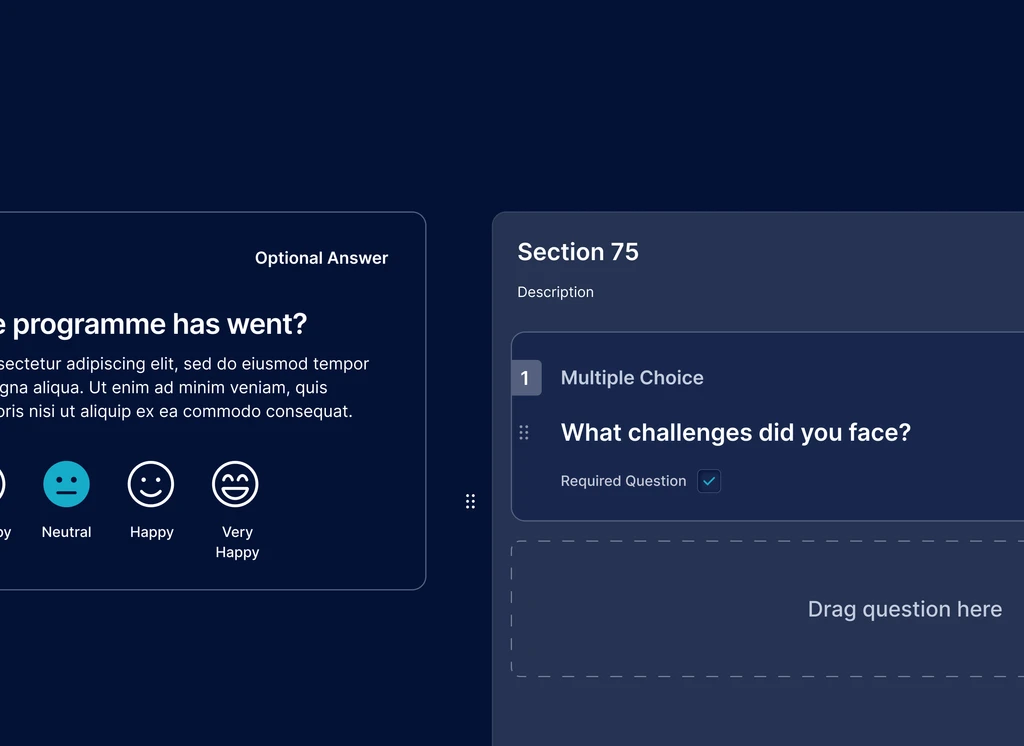
As a team member, I barely have any point of reference or benchmark for success since data collection is sporadic and it has big gaps. Research showed a sentiment of detachment & frustration.
Solution
As part of our efforts to democratise the process and empower all team members across an organisation, we integrated easy-to-build surveys (straight from the tool's UI) to gather participant and citizen feedback. Participants, supplier & delivery agents can now feed in live data.
User Scenario
Current lines of report are organic and time consuming. As a manager, I am responsible for setting up meetings and manual processes for all my team members.
Solution
We believe that our users should be focusing on what they do best, creating an impact. By automating and centralising reports within our tool, both managers and team members can continue doing so without distractions.
05 / Learnings
Taking notes for the future.
We manage billions of public sector services through static pdfs and spreadsheets across hundreds of different organisations. This makes it almost impossible to capture relevant data and use it for impactful decision making. Polyloop makes managing our strategic goals
Book an interview with me to get extended insights and answer all your questions.